
What Is It Like Being Black in Charleston, SC? An Honest Local Perspective
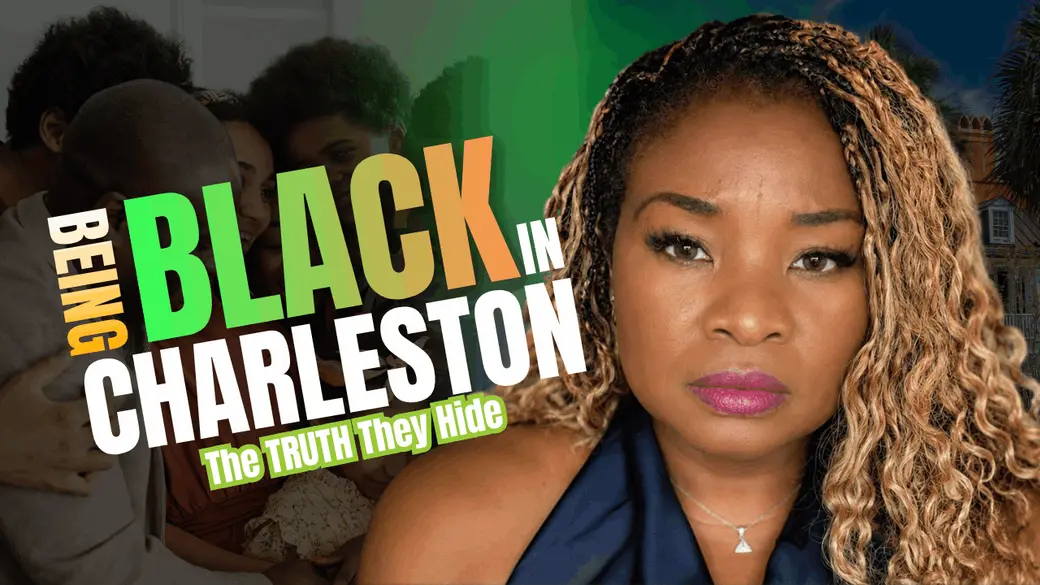
“What’s it like being Black in Charleston?”
I get asked this question all the time, especially from Black families considering a move to Charleston, Summerville, or the surrounding Lowcountry.
And I understand why.
Search online and you’ll usually find one of two extremes: a beautiful tourism version of Charleston where everything is cobblestone streets, beaches, and restaurants—or a horror story that makes you question whether you should move here at all.
The truth is more layered than either one.
I’m Shakeima Chatman, a local real estate broker who was born, raised, schooled, and churched in North Charleston. Charleston isn’t just a market I sell real estate in. This is home.
So if you're considering relocating here, I want to give you something more useful than a simple yes or no.
0:00 The question y’all keep asking me
0:14 Who I am and the number nobody prints
0:50 One ground rule before we start
1:38 Beyond the brochure: what the growth data really says
4:21 The Black-owned businesses anchoring this economy
7:40 Resources for founders in Charleston and North Charleston
8:48 The culture is in the details: Simmons, sweetgrass, Avery
10:17 My honest answer: grief, my grandmother, and the joy
12:15 The Community Comfort audit: 5 things to check yourself
13:16 Charleston in 2030 and your five action steps
14:34 The one thing to remember
What Is It Really Like Being Black in Charleston?
Charleston has a deep, living Black history and culture, particularly through the Gullah Geechee community. That influence isn't something that only exists in museums or history books. You see it in our food, language, traditions, churches, families, businesses, and communities throughout the Lowcountry.
But Charleston is also changing.
According to published census figures from the City of Charleston, Black residents represented 25.6% of the city's population in 2010. By 2020, that number had fallen to approximately 18%.
That matters.
Growth, development, housing costs, displacement, and affordability have changed who can afford to live in certain parts of Charleston.
At the same time, looking only at the City of Charleston doesn't tell the whole story.
Charleston Is Bigger Than Downtown Charleston
One mistake I see people make when researching Charleston is treating the City of Charleston—or even the downtown peninsula—as if it represents the entire area.
It doesn't.
The Charleston metro added more than 70,000 residents between 2020 and 2024, bringing the population to roughly 870,000 people.
A significant amount of that growth is happening outside the City of Charleston, particularly in Berkeley and Dorchester counties.
That's why someone relocating here should look beyond downtown and understand the entire tri-county area, including communities throughout Charleston, North Charleston, Summerville, Goose Creek, Ladson, Moncks Corner, and other parts of the Lowcountry.
Places such as Nexton and Cane Bay have also experienced significant growth as families look farther outside Charleston for housing and amenities.
Where Can You Find Black-Owned Businesses in Charleston?
This was one of the reasons I created the Black-Owned Charleston & Summerville Business Directory.
There are Black-owned restaurants, salons, professional services, contractors, retailers, and other businesses throughout the Charleston area—but finding them isn't always easy when you're new here.
The directory brings those businesses together in one place.
Visit: blackownedcharleston.thechatmangroupsc.com
The directory is free to use and free for businesses to join.
Businesses opt in to participate, and each listing provides a public review source such as Google, Facebook, or Yelp so consumers can research the business for themselves.
My goal is simple: when someone moves to Charleston and asks, “Where are the Black-owned businesses?” I want us to have somewhere useful to send them.
Resources for Black and Minority Business Owners
If you're relocating to Charleston as an entrepreneur or you're considering starting a business here, don't just research customers. Research the infrastructure available to help you build.
There are several programs and organizations worth investigating, including:
- City of Charleston Office of Minority Business Enterprise
- City of Charleston Entrepreneur Resource Center
- City of Charleston Small Business Expo
- North Charleston small, disadvantaged, and minority business certification programs
- North Charleston Women's Business Center
- Charleston County Business Accelerator
- South Carolina Minority Business Accelerator
Programs, qualifications, funding, and services can change, so always verify current requirements directly with each organization.
Before You Move: Do a “Community Comfort” Audit
This is one of the biggest pieces of advice I give relocating families:
Don't choose your community from the internet alone.
And don't ask your real estate agent to tell you where people “like you” live.
Real estate professionals have fair housing responsibilities, and more importantly, you need to decide what feels right for your family based on your own priorities.
I recommend doing what I call a Community Comfort Audit.
Before committing to an area, spend time there yourself and research five things:
1. Food and Grocery Access
Where will you actually shop?
Look for your preferred grocery stores, specialty markets, international markets, farmers markets, and the foods your family regularly buys.
2. Faith and Worship Community
If faith is important to your family, don't wait until after you move to begin looking for a church or worship community.
Visit while you're here.
You want to know whether you can find a community that practices your family's faith tradition and where you feel comfortable becoming involved.
3. Hair Care
Yes, this belongs on the checklist.
If you're moving with Black women, men, or children, find out where you're getting your hair done before you buy the house.
Search for barbers, braiders, natural hair specialists, locticians, salons, and children's hair care within a reasonable drive of the areas you're considering.
4. Healthcare
Research doctors, dentists, specialists, therapists, and other healthcare providers.
Look at reviews, credentials, hospital affiliations, availability, and whether you can find providers who have experience serving your family's needs.
5. Culture and Community
Where will you build community?
Look for cultural organizations, professional organizations, community groups, events, museums, social organizations, volunteer opportunities, and spaces where your family can connect.
Then take your research another step.
Review school district information, South Carolina Department of Education report cards, local government websites, and published school board and town or city council information yourself.
The goal isn't for someone else to decide whether a community is “good” for you.
The goal is for you to have enough information to decide whether it fits your family.
So, Should Black Families Move to Charleston?
There isn't one answer that applies to every Black family.
Charleston has an extraordinary Black history, a living Gullah Geechee culture, Black churches and institutions that have served generations, growing Black-owned businesses, and communities throughout the metro where families are building lives and businesses.
It also has real challenges—including housing affordability, development pressure, and demographic changes that shouldn't be ignored.
Both things can be true.
That's why I encourage my relocation clients to do more than ask:
“Is Charleston a good place to live?”
Ask instead:
“Can my family build the life we want here?”
That's a much better question.
And before you make that decision, come experience Charleston for yourself.
Thinking About Moving to Charleston or Summerville?
I'm Shakeima Chatman, Broker and Team Leader of The Chatman Realty Team powered by eXp Realty, License #108213.
I help relocating families, first-time buyers, and first-generation homeowners navigate buying a home throughout Charleston, Summerville, and the surrounding Lowcountry.
If Charleston is on your relocation list, my job isn't to choose a community for you. My job is to help you understand the market, evaluate your housing options, ask better questions, and make an informed decision about where you want to call home.
Explore Black-Owned Businesses
Visit the free Black-Owned Charleston & Summerville Business Directory:
blackownedcharleston.thechatmangroupsc.com
The Chatman Realty Team is committed to the letter and spirit of U.S. policy for the achievement of equal housing opportunity throughout the nation. We do not steer clients toward or away from any neighborhood on the basis of race, color, religion, national origin, sex, familial status, disability, or any other protected characteristic.
Population figures referenced in this article are based on publicly available sources and were accurate as of publication. Readers should verify current data before making relocation, business, housing, or financial decisions. This article is provided for informational purposes only and is not legal, tax, or financial advice.
Recent Posts